
Steve Reilly, senior investigative data journalist at CBS News and vice president of the National Press Club, has broken major investigative stories including the national security vulnerabilities in the U.S. power grid and failures in the U.S.’ national teacher background check system, which allowed predators to continue to teach after crossing state lines. He’s also a staunch defender of press freedom.
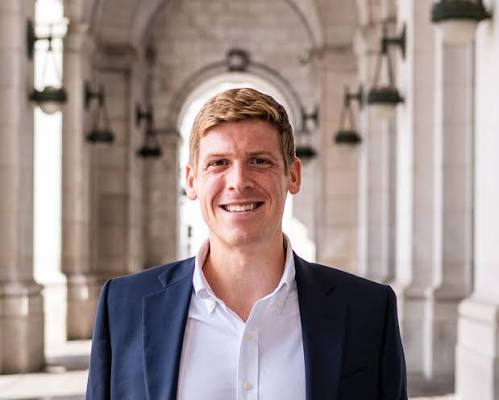
Reilly’s award-winning investigations have come with real impact, spurring congressional hearings and promoting improvements of teacher background checks. He was a finalist for the 2017 Pulitzer Prize in Investigative Reporting and has twice been a finalist for the Livingston Awards for Young Journalists. Reilly completed a Master’s degree in international relations at the University of Cambridge in 2024, where his thesis focused on international press freedom.
Reilly holds that great journalism requires more than just great investigative or writing skills – it also necessitates a political and societal environment where they are free and able to do their work.
“Press freedom matters to me because journalism isn’t just what I do: It’s who I am, and it’s essential to my ability to do my work in society. That belief started when I was a community journalist in rural Pennsylvania more than a decade ago and continues in my work in Washington today,” Reilly said.
The National Press Club Journalism Institute spoke to Reilly about the state of press freedom in the United States, the role of investigative journalism in a free press, and advice for journalists to stand up for their First Amendment rights.
Can you put the current press freedom situation in the U.S. into a global context?
Reilly: Sometimes we look at our implicit protection of the free press and think that it’s uniquely American, but a free press is a pillar of not just our democracy, but democracies around the world. The idea of democracy and self-government requires a free press, and Article 19 [of the UN Declaration of Human Rights] guarantees that citizens have the right to receive information.
It’s about the press, but also about the right of individuals to be informed about what’s going on in their society.
Erosion of press freedom harms democracy everywhere. In the U.S., we see economic pressures, news deserts, and shrinking local news coverage. We also see risks to journalists covering protests and civil unrest, sometimes facing violence.
This is not just an American issue, but a global issue. We’ve seen a backslide in the United States’ press freedom ranking from 57th to 64th, according to Reporters Without Borders. While that’s a subjective ranking, erosion of that sort weakens our ability to be a beacon of freedom around the world and to speak out when we see abuses elsewhere.
I think there’s political turmoil and upheaval and political polarization in the United States, and I don’t think that’s uniquely American in today’s global climate. A lot of countries are experiencing this. You can look on almost any continent, and political division is strengthening. There’s violence in the world, and armed conflict that we haven’t seen of a nature that we haven’t seen in a generation.
Along with that, there are challenges for anyone involved in newsgathering. I think there are problems in the U.S., but it’s important to zoom out and look at that in the global context. It is all connected and part of the global phenomenon.
What are the largest threats facing press freedom today?
Reilly: The biggest red flag is threats to journalists’ safety. When journalists cannot do their work without fear, press freedom is at risk.
The U.S. Press Freedom Tracker recorded more than 170 attacks on journalists in 2025, which shows this is a serious issue both in the U.S. and globally. Safety threats are the clearest warning sign of declining press freedom.
People aren’t able to get the information they need about their state, local, municipal government, and we also see, more broadly, threats to the newsgathering process as journalists rush to cover civil unrest in different parts of the country. That’s always a situation where journalists are at risk and journalists face challenges, at times violence, in the course of trying to gather the news.
What factors do you see in the U.S. that are helping safeguard press freedom, even as it’s come under increasing attack?
Reilly: We always think about our Constitution and the First Amendment when we think about press freedom, which may be unique in a global context in that it singles out freedom of the press – not just freedom of speech, but freedom of the press to do its work.
When we think about these constitutional protections, we also need to realize they atrophy if we don’t exercise them. They require constant attention. Civil society needs to protect and defend these rights.
I think the First Amendment is our first bulwark against abuses of freedom of the press, but it requires constant attention and action on everyone’s part to keep those protections strong.
The National Press Club has been at the forefront of that effort since 1908, drawing attention to instances where press freedom is being violated and holding our leaders accountable when we believe press freedom is under threat.
Can you speak to the unique role of investigative reporting in press freedom?
Reilly: All great reporting is investigative. I happen to have that word in my title, but I think all reporters are. What we always want to do is bring people information that they didn’t have before. We want to unearth important stories that our readers, viewers, and listeners were not aware of, and often those stories are ones that people in power would rather have kept secret.
I think the First Amendment is stronger the more we use it. You can look back to the 1970s [with] The Pentagon Papers, where rigorous investigative reporting pushed the boundaries and set the boundaries of the type of First Amendment activities that are protected in our Constitution.
Whether you call it investigative reporting or accountability reporting, any time we are seeking to tell important stories, we are executing the First Amendment as the founders intended and keeping our First Amendment protections strong.
What are some meaningful steps journalists can take to stand up for press freedom?
Reilly: I think we show the public our value as journalists when we do our work, when we tell them about their communities, when we inform them about what their government is doing in their name and with their tax dollars.
When we communicate about press freedom, it’s important to emphasize that it’s, yes, about journalists but it’s really about the end product, which is making sure that news consumers have information about what’s going on in their world, in their community, and their society.
The freedom of the press is about the public having access to information, and erosion of that weakens our society. We need to continue to do work that every day proves our value to people who want to know what’s going on in the world.
What advice would you give journalists entering the field now as they navigate a period of growing attacks on the free press?
Reilly: The media landscape today is very different from when I started in 2009, especially with the decline of some traditional entry-level outlets, [such as] the type of community publication that I started at, no longer being available as a starting point to a journalism career with the economic changes.
Journalists should know their rights, especially the right to gather and report news safely. They should also know there are institutions like the National Press Club that support them when those rights are challenged.
I don’t think anyone’s enthusiasm to be an early-career journalist should be dampened by the situation that dampened by the state of affairs today, I think it’s an exciting time to be a journalist in America, and the National Press Club and organizations like it are there to help make sure that our press freedom protections are as strong today as they ever, ever were.
Despite the challenges, there is reason for optimism. The industry is changing, but it is also creating new opportunities. It is still an exciting time to be a journalist.